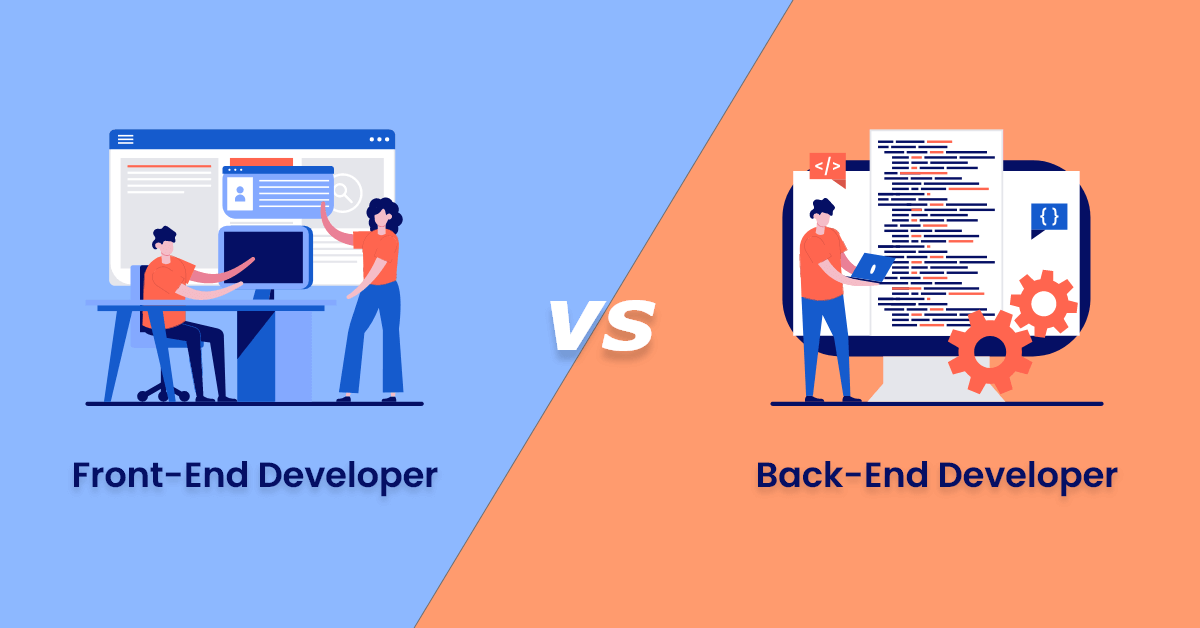
Web development is one of the fastest growing fields in the modern technology landscape. Every website and web application you use is powered by two essential components: frontend development and backend development. While both play equally important roles, their responsibilities, tools, and skill sets are very different. Understanding the difference between frontend and backend development is critical for anyone planning a career in web development.
This article provides a comprehensive comparison of frontend and backend development, covering their roles, required skills, tools, and career growth opportunities to help you make an informed decision.
Table of Contents
What Is Frontend Development
Frontend development focuses on the parts of a website or application that users see and interact with directly. This includes page layouts, navigation menus, buttons, forms, animations, typography, and overall visual presentation. A frontend developer’s primary responsibility is to ensure that a website looks attractive, performs smoothly, and delivers a consistent experience across different devices and browsers.
Frontend development combines technical skills with creativity. Developers transform design mockups into fully functional user interfaces while ensuring responsiveness, accessibility, and optimal performance. Modern frontend development follows mobile first design principles and emphasizes user centered experiences.
The core technologies used in frontend development are HTML, CSS, and JavaScript. HTML provides the structural foundation of web pages, CSS controls styling and layout, and JavaScript enables interactivity. One of the most trusted and authoritative learning resources for these technologies is MDN Web Docs, which is maintained by Mozilla and widely used by professional developers.
To build scalable and maintainable interfaces, frontend developers often rely on modern frameworks and libraries such as React, Vue.js, and Angular. Among these, React is particularly popular due to its component based architecture and efficiency in building modern web applications.
Essential Skills for Frontend Developers
A successful frontend developer needs more than basic coding knowledge. Strong problem solving abilities, attention to detail, and an understanding of user behavior are equally important.
Core frontend skills include proficiency in HTML5, CSS3, JavaScript, responsive design, cross browser compatibility, and basic search engine optimization. Familiarity with modern CSS frameworks such as Tailwind CSS allows developers to build clean and scalable interfaces more efficiently.
Frontend developers should also be comfortable with version control systems like Git, performance optimization techniques, and accessibility standards to ensure inclusive and fast user experiences.
What Is Backend Development
Backend development refers to the server side of a web application that users do not see directly. It handles data processing, database management, authentication, authorization, and application logic. Every interaction such as user login, form submission, or data retrieval depends on backend systems.
Backend developers focus on building secure, scalable, and reliable architectures. Their role is to ensure that applications can handle high traffic while protecting sensitive user data and maintaining system stability.
Backend development can be done using several programming languages, including JavaScript with Node.js, Python, PHP, Java, and Ruby. Python based frameworks like Django are widely used for building secure and scalable backend applications and are trusted by organizations worldwide.
Databases are a core component of backend development. Relational databases such as MySQL and PostgreSQL are used for structured data, while NoSQL databases like MongoDB are preferred for flexible and scalable data storage in modern web applications.
Essential Skills for Backend Developers
Backend developers require strong analytical thinking and problem solving skills. A deep understanding of programming fundamentals, data structures, and algorithms helps in designing efficient systems.
Important backend skills include server side programming, database design, RESTful API development, authentication mechanisms, and secure coding practices. To understand common vulnerabilities and security best practices, developers rely on resources provided by OWASP, which is a globally recognized authority in web security.
In addition, familiarity with cloud platforms such as AWS, Google Cloud, and Azure is becoming increasingly important as more applications shift toward cloud based infrastructure.
Frontend vs Backend: Key Differences
The primary difference between frontend and backend development lies in their areas of focus. Frontend development emphasizes user interface and user experience, while backend development focuses on data management, business logic, and system security.
Frontend issues usually affect usability or visual appearance, whereas backend issues can impact performance, data integrity, or system availability. Despite these differences, frontend and backend development are closely interconnected and must work together seamlessly.
Career Opportunities and Growth
Both frontend and backend development offer excellent career growth and competitive salaries. According to insights published in the Stack Overflow Developer Survey, web developers consistently rank among the most in demand professionals across the global technology industry.
Frontend developers often grow into roles such as frontend engineer, UI engineer, or web architect. Backend developers can advance into positions like backend engineer, software architect, or system engineer.
Those who enjoy creativity, design, and visual problem solving may find frontend development more fulfilling. Individuals who prefer logic, data handling, and system architecture may be better suited for backend development.
Which Path Should You Choose
Choosing between frontend and backend development depends on your interests and long term goals. Many beginners start with frontend development because it offers immediate visual feedback, making the learning process more engaging. Backend development, however, provides deeper technical challenges and long term scalability.
The most effective approach is to learn the basics of both frontend and backend development before specializing. This balanced knowledge helps developers build robust, scalable applications and creates a strong foundation for a future proof career in web development.
Also Check Programming Mistakes Beginners Make – How to Avoid Them 2026
1 thought on “Frontend vs Backend Development – Comprehensive Guide 2026”